Venugopala Swamy Temple (2026 Guide): Hosa Kannambadi, KRS Backwaters, Timings & Sunset Boating

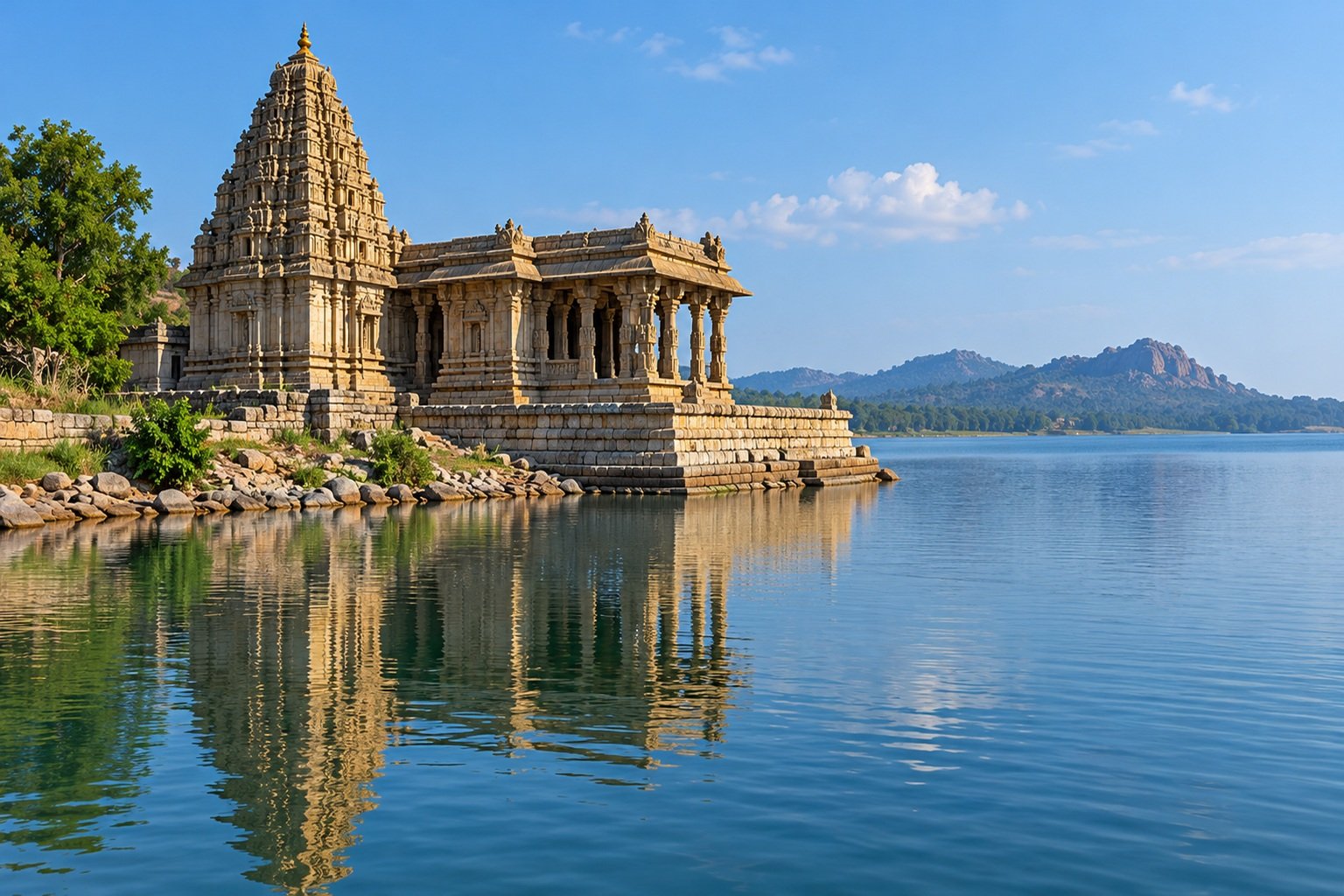
Often referred to as the “Floating Temple of Mysuru” because of its dramatic peninsula setting surrounded on three sides by the shimmering blue expanse of the Kaveri River, Venugopala Swamy Temple is one of the most serene and photogenic destinations in southern Karnataka. Below is the verified 2026 visitor command manual.
28 km (40 min via KRS Road)
9:00 AM – 6:30 PM (Daily)
FREE (No Entry Fee)
5:15 PM – 6:15 PM
The Miraculous Relocation Story
The original temple was built in the 12th century CE during the reign of Hoysala King Veera Ballala II in the historic village of Kannambadi. When Sir M. Visvesvaraya designed and constructed the landmark Krishna Raja Sagara (KRS) dam in the 1920s, the entire village and the temple were submerged under the massive reservoir. For over seven decades, the temple only emerged during extreme summer droughts.
Between 2003 and 2011, the Khoday Foundation undertook one of the most ambitious heritage architectural relocations in Asian history: over 16,000 individual soapstone blocks were photographed, cataloged, numbered, and rebuilt on an elevated 7-acre landscaped peninsula 1 km from the original submerged site, restoring the temple with 100% architectural fidelity.
Temple Architecture & Key Highlights
- Sanctum Deity: The garbhagriha enshrines a magnificent black stone idol of Lord Venugopala (Krishna) playing the divine flute with his legs crossed in tribhanga posture, flanked by cows and gopikas.
- Lush Manicured Lawns: The temple is surrounded by expansive green lawns, stone paved pathways, and tranquil stone benches overlooking the vast Kaveri reservoir waters.
- Sunset Views: The temple faces west across the reservoir, offering panoramic sunset views across the water with Chamundi Hill visible in the distant southeast.
Frequently Asked Questions: Venugopala Swamy Temple
Is photography allowed at Venugopala Swamy Temple?
Mobile photography and camera photography are allowed across the manicured outdoor courtyards and lakeside lawns. However, commercial pre-wedding shoots require prior trust permission, and photography inside the inner sanctum (garbhagriha) is strictly prohibited.
Can I combine Venugopala Swamy Temple with Brindavan Gardens?
Yes, they are just 9 km apart. A popular itinerary is to visit Venugopala Swamy Temple at 4:00 PM for peaceful lakeside exploration and sunset, then drive 15 minutes to Brindavan Gardens at 6:30 PM for the musical fountain light show.
Verified 2026 Timings, Backwater Boating & Route Blueprint
To help travelers plan their visit accurately without getting stuck when the inner sanctum gates close, here is the complete operating timetable and logistics schedule verified on site at Hosa Kannambadi.
How to Reach from Mysore City & KRS Dam
- By Car / Cab: Distance is 28 km (approx. 40 minutes). Drive along KRS Road via Belagola and Pumphouse Circle, then take the signposted left turn toward Hosa Kannambadi. Round-trip taxi fare from Mysore Junction averages Rs 1,100 to Rs 1,400 with waiting time.
- From Brindavan Gardens: The temple is situated 12 km southwest of Brindavan Gardens North Gate. Visiting both sites on a single afternoon circuit (Temple from 4:30 PM to 6:00 PM, followed by the Musical Fountain at Brindavan Gardens at 7:00 PM) is the most efficient itinerary.
- By KSRTC Bus: Board KSRTC Route 303 or 303A from City Bus Stand to KRS village, then take a shared auto or local private shuttle 3.5 km to the temple gates.
What is the History of the Submerged Kannambadi Temple?
Built originally in the 12th century under Hoysala king Vishnuvardhana, the temple stood in the historical village of Kannambadi. When Sir M. Visvesvaraya constructed the Krishna Raja Sagara Dam in 1911–1932, the village and temple were submerged. During severe summer droughts, the sanctum pinnacle used to re-emerge from the waters. In the early 2000s, the Khoday Foundation undertook the monumental task of dismantling the temple stone by stone, numbering every sculpted block, and reconstructing it with architectural precision on higher ground at Hosa Kannambadi.
How We Researched & Field-Audited This Guide
At Planet Mysuru, we enforce zero third-party outsourcing and zero AI-generated guesswork. Every entry, route, tariff, and timing in this dossier was physically audited in Mysuru:
- Physical On-Site Inspection: Verified operating counters, gate queues, parking tariffs, and photography permissions.
- Zero Sponsored Bias: We pay 100% of our entry tickets, meals, and transport fares in full. No commercial brand can buy inclusion.
- Official Gazette Alignment: Cross-referenced with the Archaeological Survey of India (ASI), Mysuru District Administration, Palace Board, and KSRTC transit notifications.
Nikhil Furtado
Founder & Editor-in-ChiefTechnology architect and researcher with over 15 years documenting Mysuru's living heritage and regional trails. Nikhil oversees all on-ground investigative documentation and technical knowledge graph integration for planetmysuru.com.
Explore More Field Guides
Handpicked stories in Heritage & Culture