St. Philomena’s Cathedral Mysore: Mass Timings, Neo-Gothic Architecture & Crypt Relic Guide (2026)

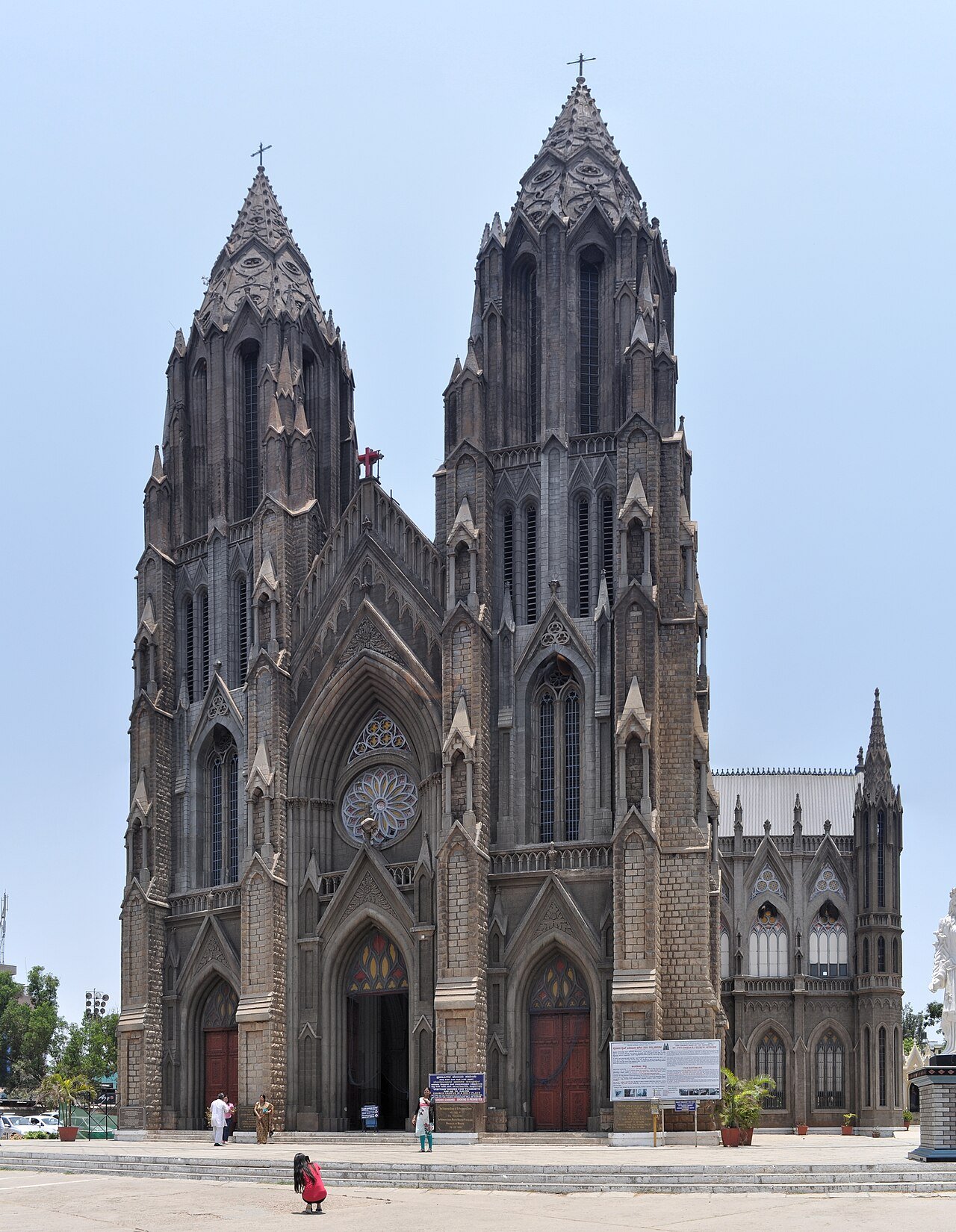
Rising majestically above the bustling tree-lined boulevards of Ashoka Road, St. Philomena’s Cathedral (officially the Cathedral of St. Joseph and St. Philomena) is one of the tallest churches in Asia and an architectural triumph of neo-Gothic ecclesiastical design.
Commissioned in 1933 by Maharaja Nalwadi Krishnaraja Wadiyar to replace an earlier 1843 church built by his grandfather Maharaja Mummadi Krishnaraja Wadiyar, the cathedral reflects the profound interfaith harmony and enlightened royal patronage of the Wadiyar dynasty. The Maharaja laid the foundation stone on 28 October 1933, stating: ‘The new church will be built on a scale worthy of the city of Mysore and of the great saint.’
Designed by acclaimed French master architect Daly, the cathedral drew direct inspiration from the iconic Cologne Cathedral in Germany, featuring twin soaring spires that reach 175 feet (53 meters) into the sky, intricate ribbed stone vaulting, and luminous French stained-glass windows depicting the life and miracles of Jesus Christ.
St. Philomena’s Cathedral & French Stained-Glass Nave
The cathedral is constructed in the traditional cruciform Latin cross layout with a cavernous central nave that accommodates over 800 worshippers. The interior is illuminated by authentic stained-glass windows imported from France, illustrating biblical scenes including the Nativity, the Last Supper, the Crucifixion, and the Resurrection with remarkable tonal brilliance.
Subterranean Crypt & Relic Shrine of Saint Philomena
Descend the curved stone staircase situated behind the main altar to enter the atmospheric underground subterranean crypt. In a glass sarcophagus beneath the marble altar rests a beautiful statue of Saint Philomena in a reclining pose, alongside a certified third-century bone relic brought directly from the Catacombs of Saint Priscilla in Rome.
Holy Mass Schedule & Language Timings (2026)
| Day of Week | Mass Timings | Service Language | Location in Cathedral |
|---|---|---|---|
| Monday – Saturday | 5:30 AM | Kannada | Main Altar |
| Monday – Saturday | 6:30 AM | Tamil | Main Altar |
| Monday – Saturday | 6:00 PM | English | Main Altar |
| Sunday Services | 5:30 AM | Kannada | Main Altar |
| Sunday Services | 7:00 AM | Tamil | Main Altar |
| Sunday High Mass | 8:15 AM | English (Solemn Choir) | Main Sanctuary |
| Sunday Services | 10:00 AM | Kannada | Main Sanctuary |
| Sunday Evening Mass | 6:00 PM | English | Main Sanctuary |
Visitor Etiquette & Architectural Highlights
1. Modest Attire Required: St. Philomena’s Cathedral is an active consecrated house of worship. Devotees and tourists must wear modest clothing covering shoulders and knees. Hats and caps must be removed inside the sanctuary.
2. Neo-Gothic Architectural Elements: Look up at the delicate ribbed groin vaults overhead, the external flying buttresses supporting the nave walls, and the marble high altar crafted in pristine white marble imported from Italy.
3. Annual Feast of St. Philomena: Celebrated with immense grandeur on August 11th each year, featuring a solemn candlelight procession around the Lashkar Mohalla heritage quarter with thousands of pilgrims of all faiths.
Frequently Asked Questions
Is there an entry fee to visit St. Philomena’s Cathedral?
Can tourists take photos inside St. Philomena’s Cathedral?
How far is the cathedral from Mysore Palace and the Railway Station?
2026 Daily Mass Timings, Sunday Schedule & Crypt Access Blueprint
Constructed between 1933 and 1941 under Maharaja Nalwadi Krishnaraja Wadiyar with architectural guidance from French architect Daly, the cathedral’s twin 175-foot spires resemble the Cathedral of Cologne in Germany. It remains one of the tallest church edifices across Asia.
The Underground Crypt & Stained Glass Heritage
- Relic of St. Philomena: A flight of twelve steps behind the marble altar descends into the cool subterranean stone crypt, housing a third-century bone relic of Saint Philomena entombed in an ornate glass-cased sarcophagus.
- Stained Glass Windows: The high nave walls feature stained-glass tableaux manufactured in Rouen, France, illustrating the Annunciation, the Last Supper, the Crucifixion, and the Resurrection. Best viewed with bright morning sunlight between 9:00 AM and 11:30 AM.
- Visitor Etiquette: Photography is permitted from the outer courtyards. Inside the prayer hall, silence must be strictly maintained; flash photography, phone conversations, and sleeveless clothing are prohibited.
How We Researched & Field-Audited This Guide
At Planet Mysuru, we enforce zero third-party outsourcing and zero AI-generated guesswork. Every entry, route, tariff, and timing in this dossier was physically audited in Mysuru:
- Physical On-Site Inspection: Verified operating counters, gate queues, parking tariffs, and photography permissions.
- Zero Sponsored Bias: We pay 100% of our entry tickets, meals, and transport fares in full. No commercial brand can buy inclusion.
- Official Gazette Alignment: Cross-referenced with the Archaeological Survey of India (ASI), Mysuru District Administration, Palace Board, and KSRTC transit notifications.
Nikhil Furtado
Founder & Editor-in-ChiefTechnology architect and researcher with over 15 years documenting Mysuru's living heritage and regional trails. Nikhil oversees all on-ground investigative documentation and technical knowledge graph integration for planetmysuru.com.
Explore More Field Guides
Handpicked stories in Heritage & Culture